
When a Shopify store scales or switches entities, seeing thousands of dollars in Pending while the first deposited USD payout into Shopify Balance is only $63.48 USD often makes merchants wonder whether they hit a Shopify Payments Reserve or a risk hold.
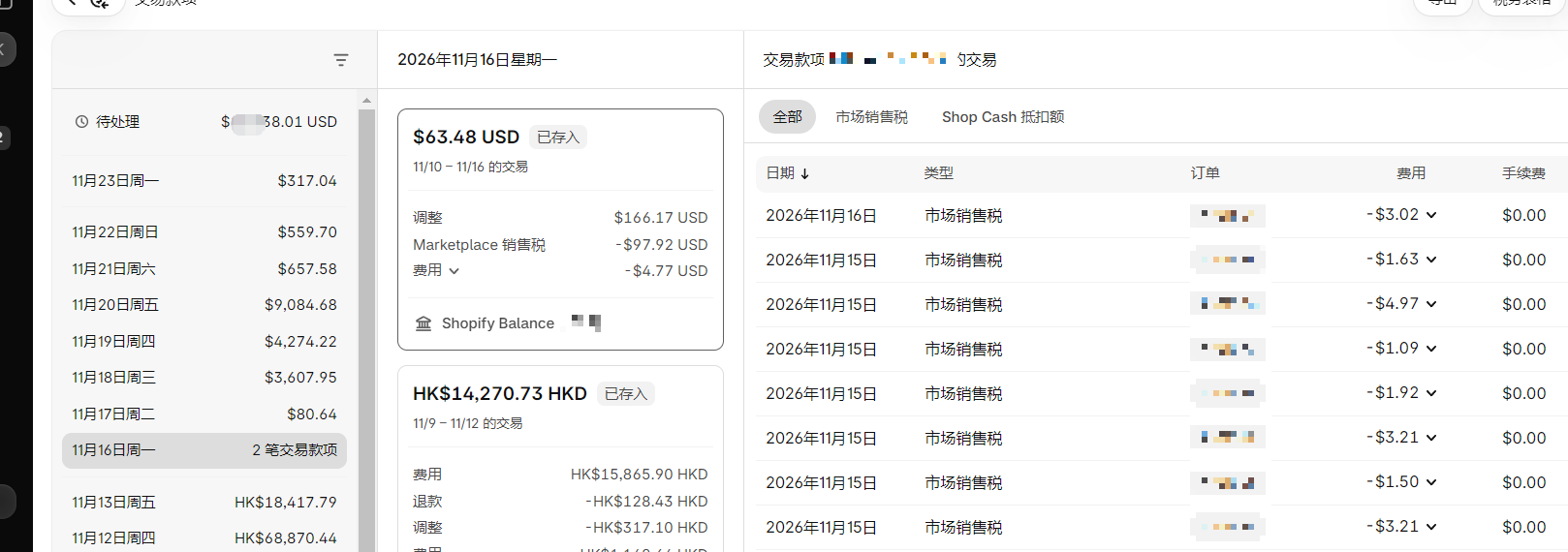
Inspecting the three-pane Payouts breakdown reveals that no reserve was withheld: the $166.17 USD adjustment was offset by -$97.92 USD in Marketplace sales tax and -$4.77 USD in fees. Even better, the very next day (day 7 after activation), the store qualified for faster payouts arriving within 3 business days.
1. Initial Payout Schedule vs. Reserve vs. Tax Offset
- Initial Payout Schedule (5–10 Days): Normal evaluation period for new or newly switched Shopify Payments accounts; funds sit in Pending with scheduled payout dates.
- Shopify Payments Reserve: Explicitly displayed as Reserved funds with a percentage/amount and scheduled release date to cover potential chargebacks or refunds.
- Marketplace Sales Tax & Adjustments: Deducted directly from the payout batch (such as
-$97.92 USDMarketplace sales tax) and listed order-by-order in the right-hand transactions table.
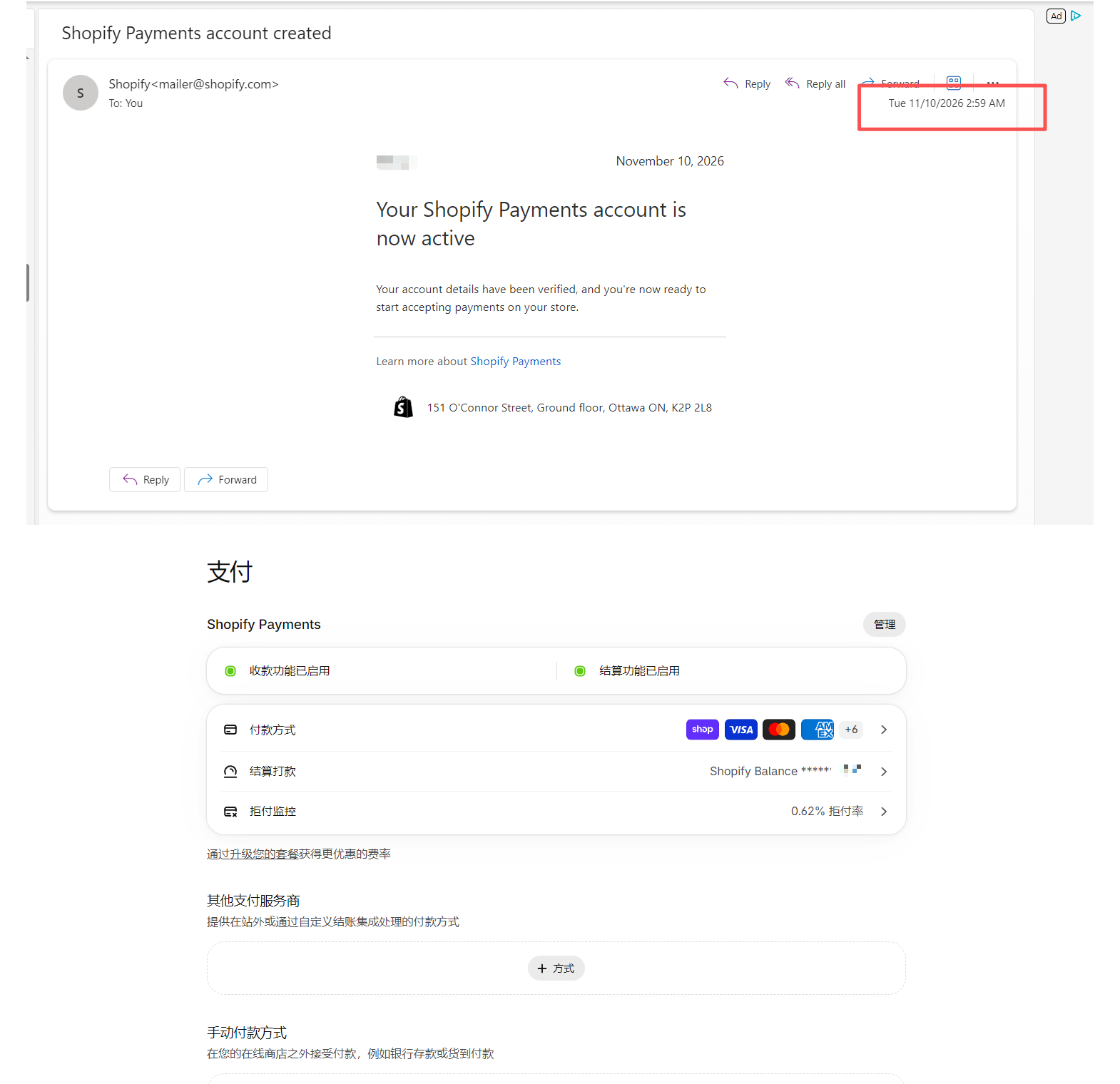
2. Nov 10: US Shopify Payments Activation & Balance Link
On November 10, 2026 (2:59 AM), we received the Your Shopify Payments account is now active email. In Settings → Payments, both Payments and Payouts show active green status, linked to Shopify Balance with a 0.62% chargeback rate baseline.
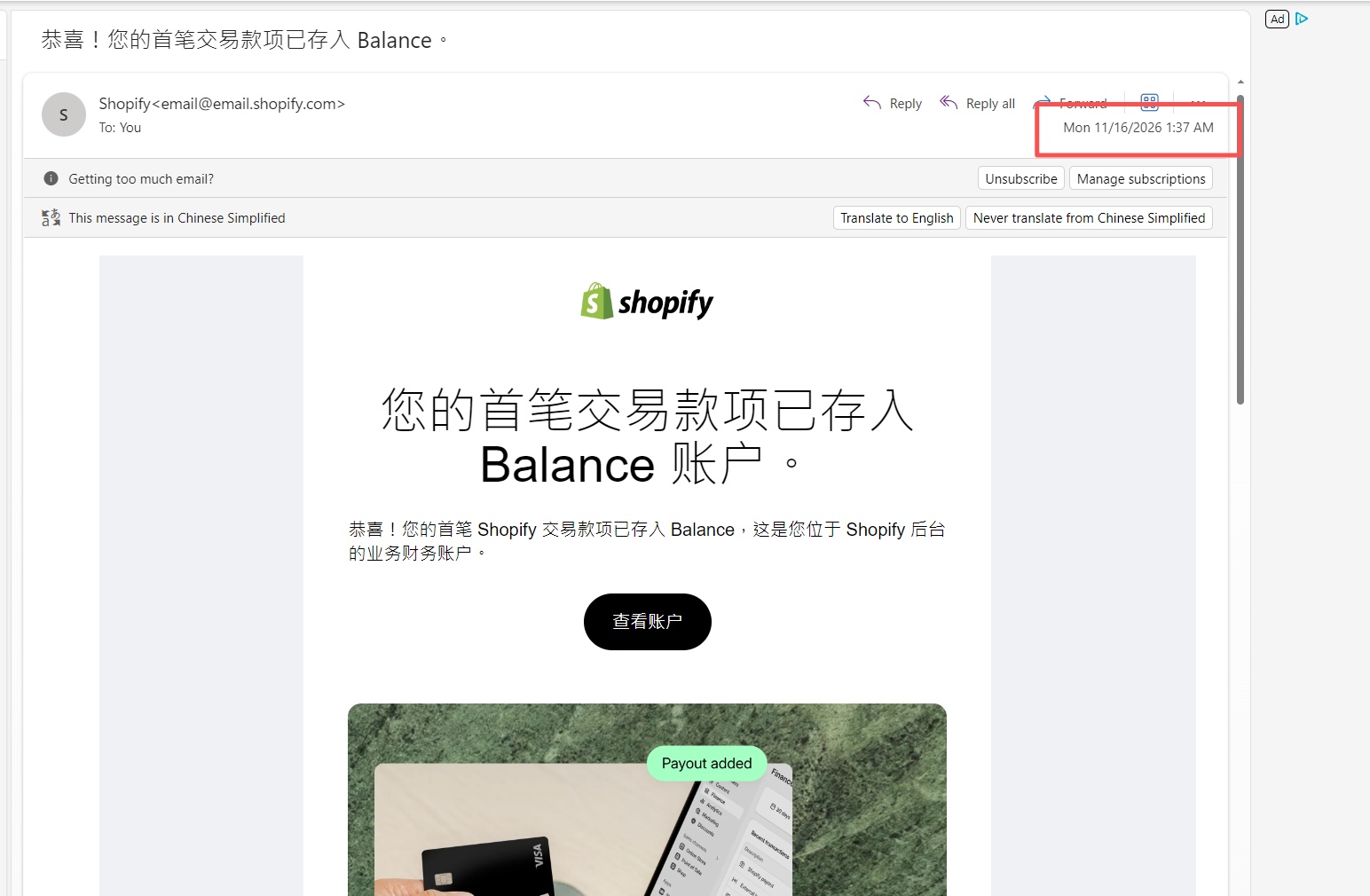
3. Nov 16: Why the First USD Payout Was $63.48 USD
Six calendar days later on November 16, 2026 (1:37 AM), Shopify sent the notification that our first payout had been deposited into Shopify Balance.
Opening the Payouts three-pane screen explains both the $63.48 USD deposit ($166.17 USD adjustments minus $97.92 USD Marketplace sales tax and $4.77 USD fees) and the dual-currency crossover from legacy HKD payouts (HK$14,270.73 HKD for Nov 9–12 orders) to the new USD daily pending schedule (Nov 17–23).
4. Nov 17: Qualifying for 3-Business-Day Faster Payouts
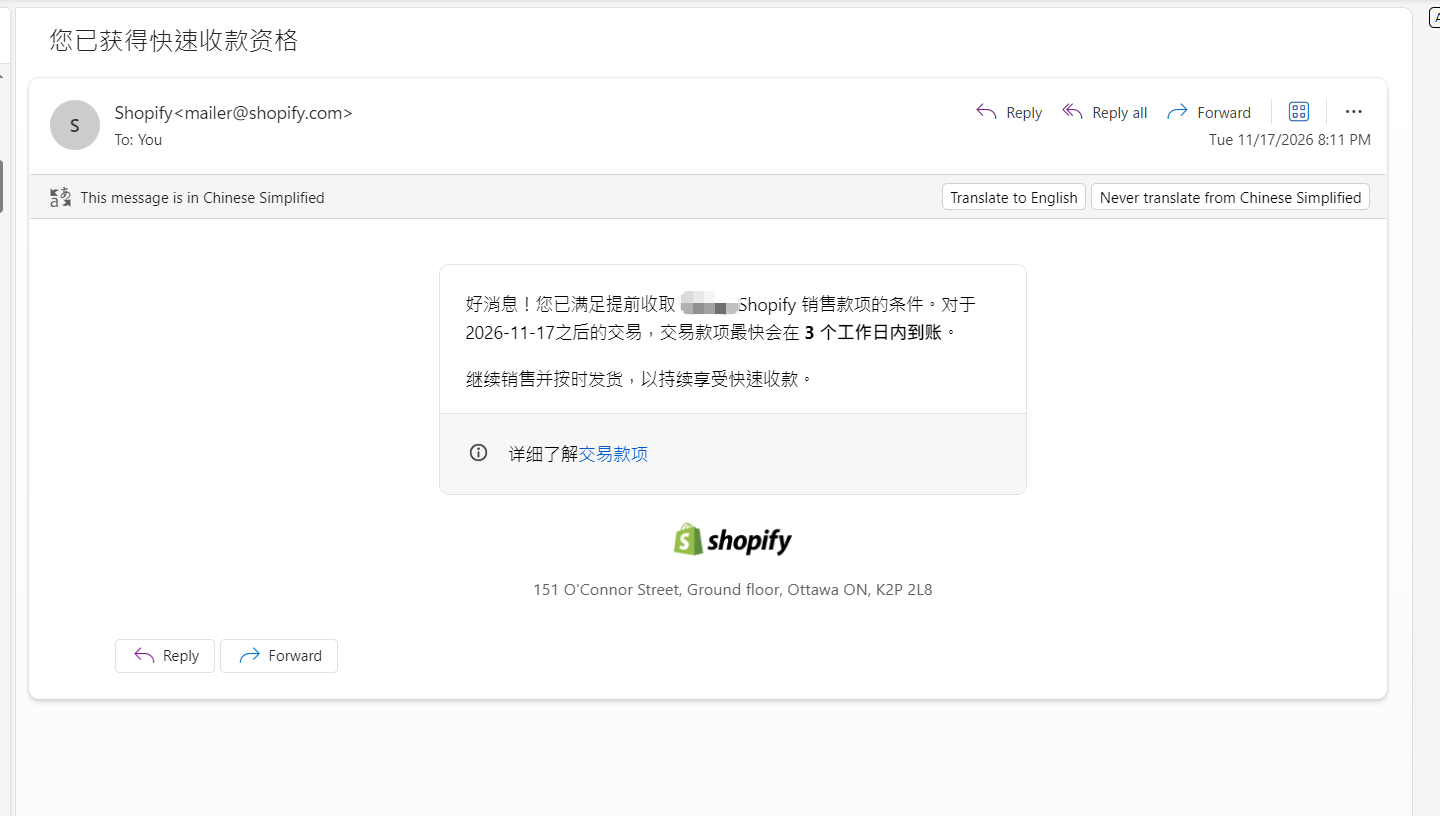
On November 17, 2026 (8:11 PM)—seven days after activating US Shopify Payments—the store received the official email "You've qualified for faster payouts": transactions after 2026-11-17 arrive in as fast as 3 business days, provided the store continues selling and fulfilling orders on time.
5. FAQ
Why does Shopify Payments hold a reserve, and how does it differ from Figure 3?
A reserve holds a percentage or fixed amount of funds for a set period to cover potential chargebacks and displays as Reserved funds with a release date. In Figure 3, the -$97.92 USD deduction is Marketplace Facilitator sales tax collected and remitted by the platform, not a reserve hold.
How long does the initial 10-day payout schedule take to shorten?
Timelines vary by store fulfillment and chargeback performance. In this recorded case, the store activated US Shopify Payments on Nov 10, received its first Balance deposit on Nov 16, and qualified for 3-business-day faster payouts on Nov 17 (day 7).